

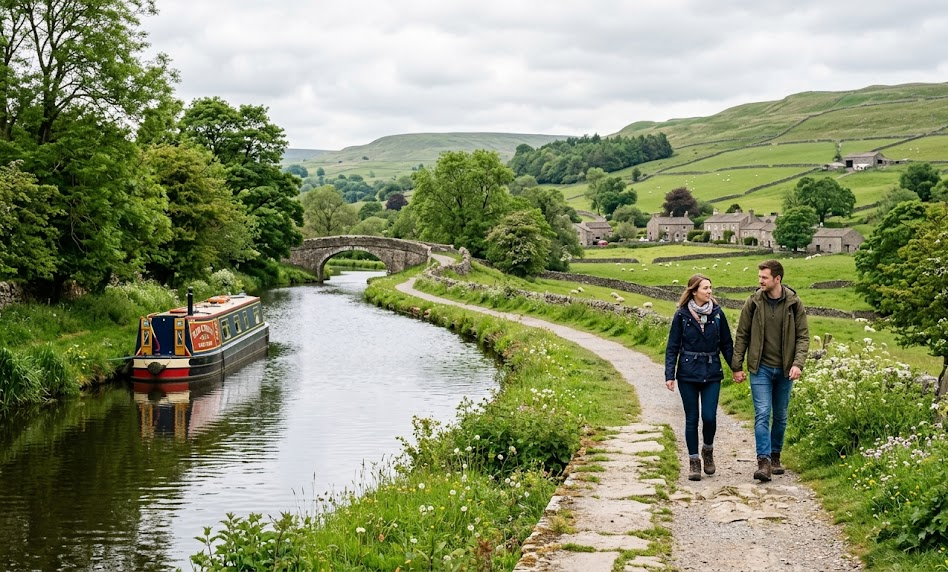
You have booked your flights, packed your bags, and arrived at the quiet of a beautiful place. But your mind is still filled with emails. This experience is common for many.
Many people in the UK experience the same problem. They take one big holiday a year, hoping it will fix months of stress, only to return home feeling just as drained. The issue isn’t the destination; it’s the way travel is approached.
According to InsureandGo, 96% of adults in the UK consider health and wellbeing when they book their holidays. This shows that people are not just taking breaks for fun, they are taking them to cope with stress. This raises an important question: Is one major trip each year enough to help?
Slow travel helps you relax differently. Instead of hurrying from one sight to another, this approach encourages a more leisurely, simpler way to travel. By doing less, you often find that you experience much more.
At Toast Leisure, we offer tailored life coaching that empowers individuals to embrace the moment and cultivate a lifestyle rich in happiness, mindfulness, and balance.
Signs You Need a Slower Break
In the UK, nine out of ten adults felt very stressed in the past year, and this figure has remained the same for 3 years. This shows that just trying harder to get better may not work. Instead, taking a different kind of break might help.
Before you plan anything, check if any of these statements apply to you:
- You feel unable to leave a work notification unchecked, even on weekends.
- You feel guilty about resting because you think you should be working.
- When you arrive at a new place, you immediately think about what to do next.
- You scroll your phone during meals without paying attention.
- When you return from holiday, you feel like you need another one.
If two or more of these resonate with you, your body is asking you for a change. Not a bigger trip, but a slower one.
Why Micro-Breaks Outperform Long Holidays
The mental benefits of a holiday fade within weeks of returning home. Taking one long break puts a lot of pressure on that time to provide all the relaxation you need.
Instead, shorter breaks of two to four nights year-round help spread out the rest. This creates a more consistent sense of calm rather than a major boost followed by a slow decline.
Short trips also reduce the stress that can start before you even leave. You avoid long waits at airports, lengthy drives, and the worry of flight delays or lost luggage. Because of this, you arrive feeling relaxed since the journey is easier.
The Mental and Environmental Case for Staying Local
Choosing a UK destination instead of going abroad is a smart decision that offers real benefits.
Travelling shorter distances creates less carbon pollution. This is vital as environmental concerns increase. Many travellers now think about this when planning their trips. The trend towards quiet tourism and heritage stays this year indicates a growing interest in meaningful local experiences rather than just visiting famous landmarks overseas.
| Long-Haul Holiday | Local UK Micro-Break |
| Higher carbon emissions | Significantly lower carbon footprint |
| Longer travel time and stress | Minimal travel, easier arrival |
| Pressure to see and do everything | Freedom to slow down and simply be |
| Expensive and complex logistics | Simpler planning, lower cost |
| Annual recovery pattern | Regular, sustainable wellbeing |
Staying closer to home helps you connect with some of the UK’s quieter, often ignored spots. A coastal village in Northumberland, a woodland retreat in the Wye Valley, a stone cottage on the edge of Dartmoor. You don’t just visit these places; you experience them.
How to Actually Slow Down When You Get There
Slowing down doesn’t happen automatically. Many people need to practice it as a skill. Here’s how to actually slow down when you get there:
Choose One Focus and Stick to It
Choose one main activity for your break. Don’t try to fit in three activities or five sights. Focus on one thing, like a coastal walking trail, a pottery class, or a visit to a working farm or a small heritage railway. It is better to explore deeply than to rush through many things.
Eat Locally and Seasonally
Pick a meal that represents your location. For example, enjoy a Cornish crab sandwich or a bowl of Scotch broth in the Borders. When your food comes from the area around you, you are more present in the moment. This is mindfulness at its simplest.
For clearer guidance on what the UK produces naturally at its best each month, explore this practical guide to seasonal food.
Leave Room for Nothing
Take time each day to relax without a plan. Find a spot by a window or go for a walk without a specific goal. Let your senses guide you. Notice the smell of wood smoke, feel the roughness of a dry-stone wall, and enjoy the quiet of a village at dusk. These small details will stay with you long after you come back.
Conclusion
A shorter, slower, and closer break is an excellent alternative to a traditional holiday. For many people, this choice is the most refreshing of the year. By choosing less distance and lower pressure, you create space to recharge truly.
Learning to slow down is a skill that extends beyond your holiday. If you find it hard to switch off even when you are away, our mindfulness coaching at Toast Leisure helps you find that inner peace every day of the week.

