

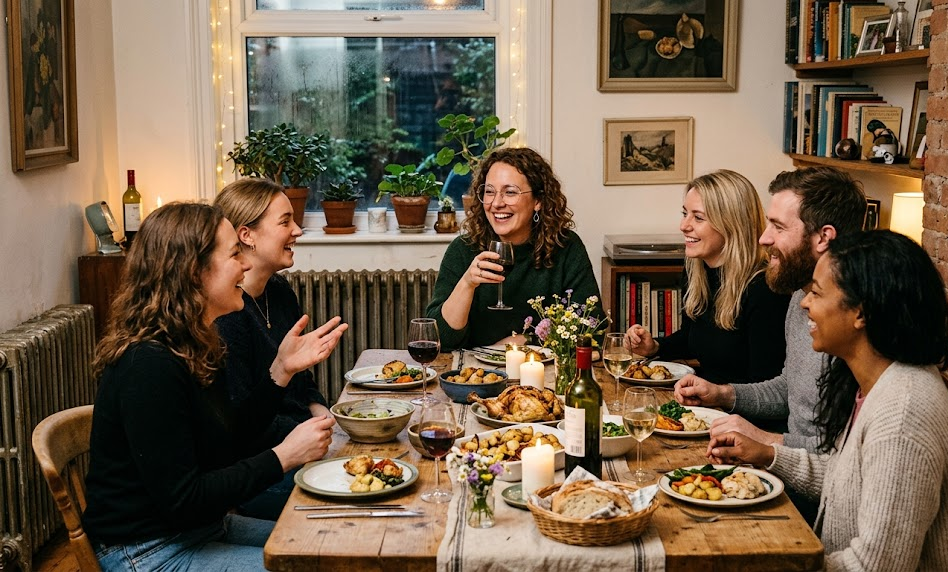
The table is set, and candles are lit. Your guests will arrive in 20 minutes, but you worry the soup is ruined.
Does this sound familiar?
Hosting a dinner party should be enjoyable, not stressful. Occasionally, the desire to impress makes a simple gathering feel like a difficult task. Choosing to host in a relaxed way makes the process easier. Focusing on radical hospitality helps you pay attention to your guests instead of trying to be perfect.
When you stay calm as a host, your guests feel it too. The atmosphere becomes warm, and conversation flows easily. An evening becomes special not because the food is perfect, but because everyone feels comfortable.
According to the Office for National Statistics, nearly one in four adults in Great Britain reports feeling lonely. This shows that the dinner table can be one of the most important tools you have.
At Toast Leisure, we offer tailored life coaching that empowers individuals to embrace the moment and cultivate a lifestyle rich in happiness, mindfulness, and balance.
Practical Tips to Host a Stress-Free Dinner Party
Here are some practical tips to host a stress-free dinner party:
Tip 1: Choose a One-Pot Wonder
To lower your stress, choose a meal that cooks itself, such as the following:
- A slow-cooked lamb shoulder
- A large pot of dhal
- A hearty chicken casserole
These dishes are easy to prepare and often taste better after sitting for a while. This way, you can greet your guests with a glass of wine instead of worrying about the oven.
Tip 2: Go Cold If You’re Nervous
A sharing board is easy to prepare. You don’t need to cook or worry about timing. Just arrange a variety of:
- Cheese
- Cured meats
- Olives
- Bread
- Seasonal fruit
This colourful spread looks inviting and plentiful. You can enjoy the smell of fresh bread, the tang of sharp cheddar, and the vibrant colours of grapes and figs. This is a fun and simple feast that comes together effortlessly.
Tip 3: Buy the Dessert
It’s perfectly okay to buy a tasty tart from the bakery. Getting a dessert can relieve some pressure and help you build that confidence over time.
People may not remember if you made the dessert yourself. Still, they will definitely not forget if everyone had a great time and shared some laughs.
Tip 4: Set a Guest Limit
More guests mean more noise and more movement to handle. A table with six to eight people tends to have the best conversations. Keep the guest list small, and energy will follow.
Tip 5: Give Your Evening a Finish Time
Knowing when the evening will end can help reduce anxiety by letting you plan around it. It also helps guests know what to expect. A simple statement like “We will finish around ten” sets the right tone without being awkward.
Tip 6: Name the Anxiety Out Loud
Let your trusted friend know you are a bit nervous before they arrive. This can help you feel more relaxed and genuine. Being honest can make you a warmer and better host.
Tip 7: Make It a Communal Evening
Ask one guest to bring wine and another to prepare a starter. Have someone create the music playlist. These simple tasks help guests feel involved from the moment they arrive. They become part of the event, not just spectators. This co-hosting approach changes the entire atmosphere.
Tip 8: Use Lighting and Sound
Overhead lighting can spoil the atmosphere, so use lamps, tea lights, or warm string lights instead. This will change the room. Play a calm playlist of jazz, acoustic soul, or ambient folk softly in the background. The soft glow of candlelight and a familiar song create a better mood than any centerpiece.
Tip 9: Turn a Tiny Kitchen Into an Asset
The best dinner parties often take place in small kitchens. The small space helps people feel connected. Keep the worktop clear and prepare everything in advance. Let your guests sit on stools while you finish cooking.
For a clearer understanding of how to make the most of a compact space, explore this guide to small kitchen organisation tips.
Conclusion
A successful dinner party depends on one thing above all: your presence. The food, decorations, and guest list are less important than your ability to enjoy the moment.
Keep the menu simple, share tasks with others, and don’t set unrealistic expectations. Focus on having fun during the evening, and it will be a success.
Learning to manage social stress is a key part of finding your personal balance. If you find out that perfectionism is holding you back from enjoying life’s simple pleasures, our coaching services can help you shift your mindset and adopt a more relaxed approach to everyday life.

